

How a woven garment factory really works
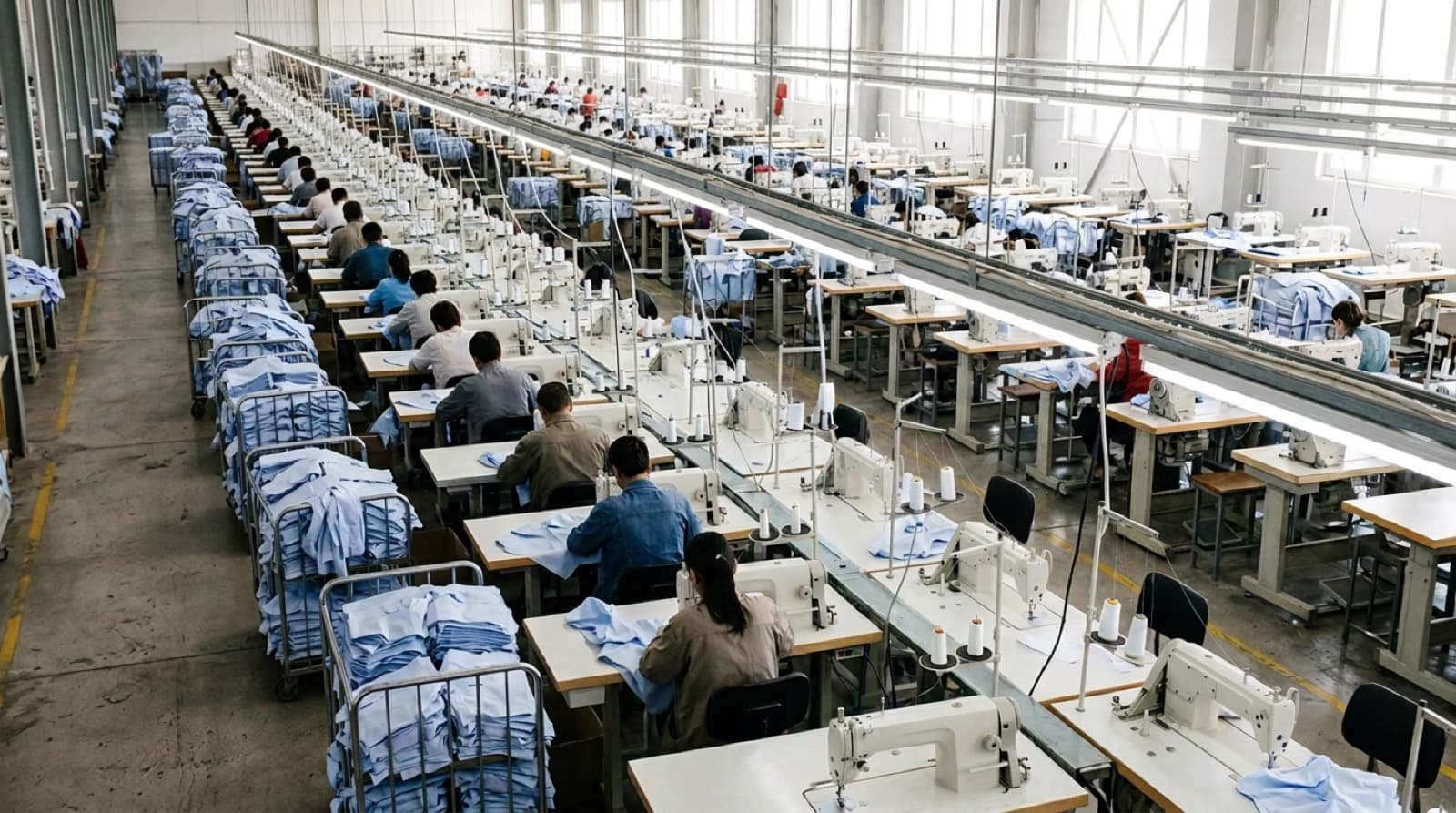
A woven garment factory turns rolls of shirting, twill or poplin into finished shirts and trousers in five rooms: the fabric store, the cutting room, the sewing floor, finishing and packing. Speed is set by the slowest operation on each line, and cost is set mostly before a needle moves.
Myth or fact?
Myth: Adding more operators always makes a line faster.
Fact: A line runs at the pace of its slowest operation, the bottleneck. People added anywhere else only build piles of work in progress. Output rises when the work is rebalanced so every station takes about the same time.
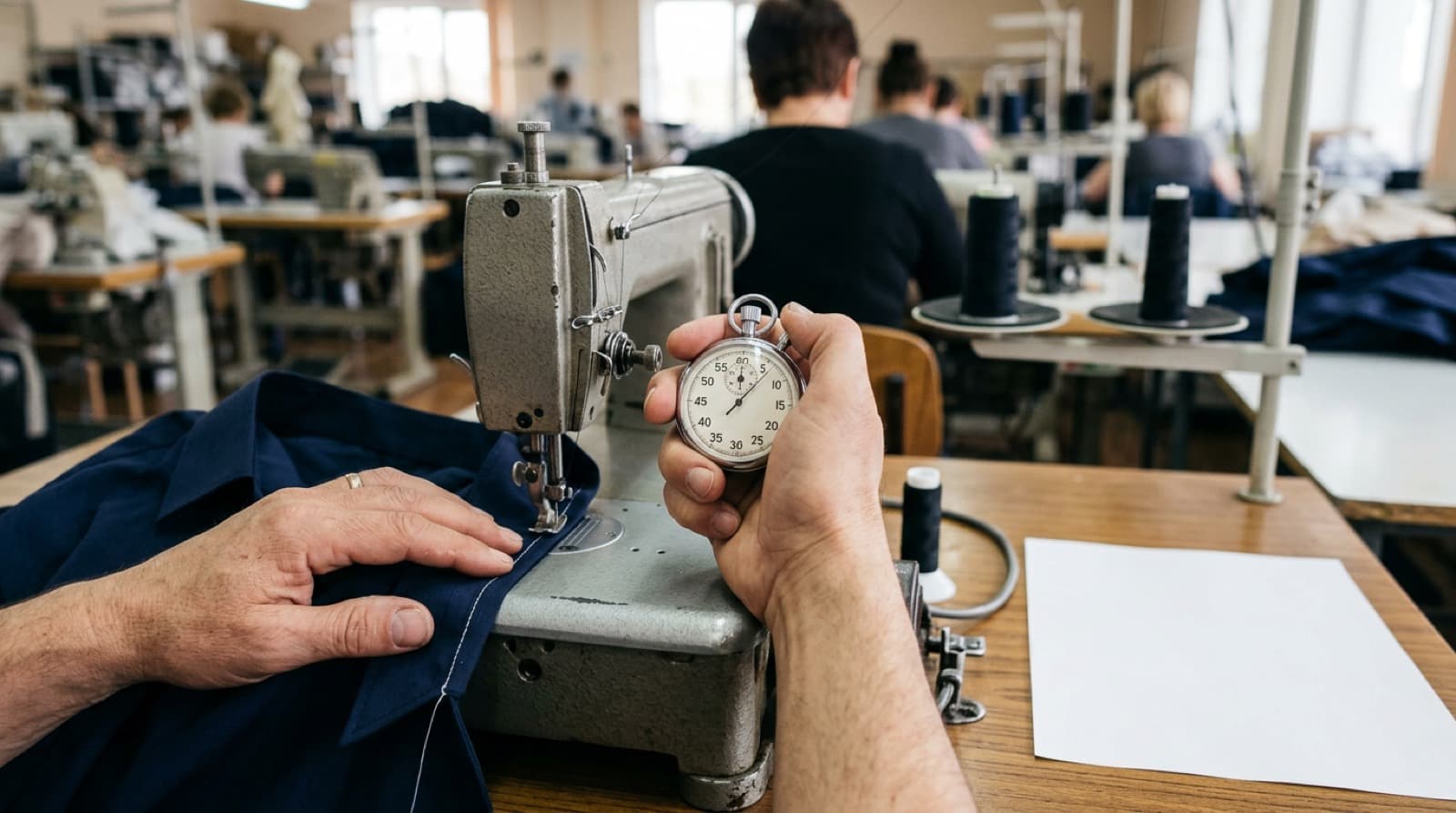
Myth: The SMV is how long the garment takes to sew in this factory.
Fact: The standard minute value is the time a trained operator would take at a standard pace, with allowances. Real time is the SMV divided by the line's efficiency: a 20-minute shirt on a line running at 60% uses about 33 minutes of operator time.
Myth: Cutting is the simple part.
Fact: The cutting room decides fabric use, and fabric is usually the largest part of a woven garment's cost. A few points of marker efficiency can be worth more than many seconds saved on the sewing floor.
1. The fabric store: check before you cut
Fabric arrives in rolls from the mill with a packing list of lengths, widths and shade lots. Before any of it is cut, a sample of rolls is inspected on a lit inspection frame, usually by the four-point system: each fault is scored one to four points by its length, and the roll is passed or held by its points per 100 square yards.
The store also checks shade (rolls from different dye lots are kept apart so a garment never mixes them), shrinkage after washing, and width. A shirt cut from a narrower roll than the marker expects is a shirt that cannot be made.
2. The cutting room: where the fabric cost is decided
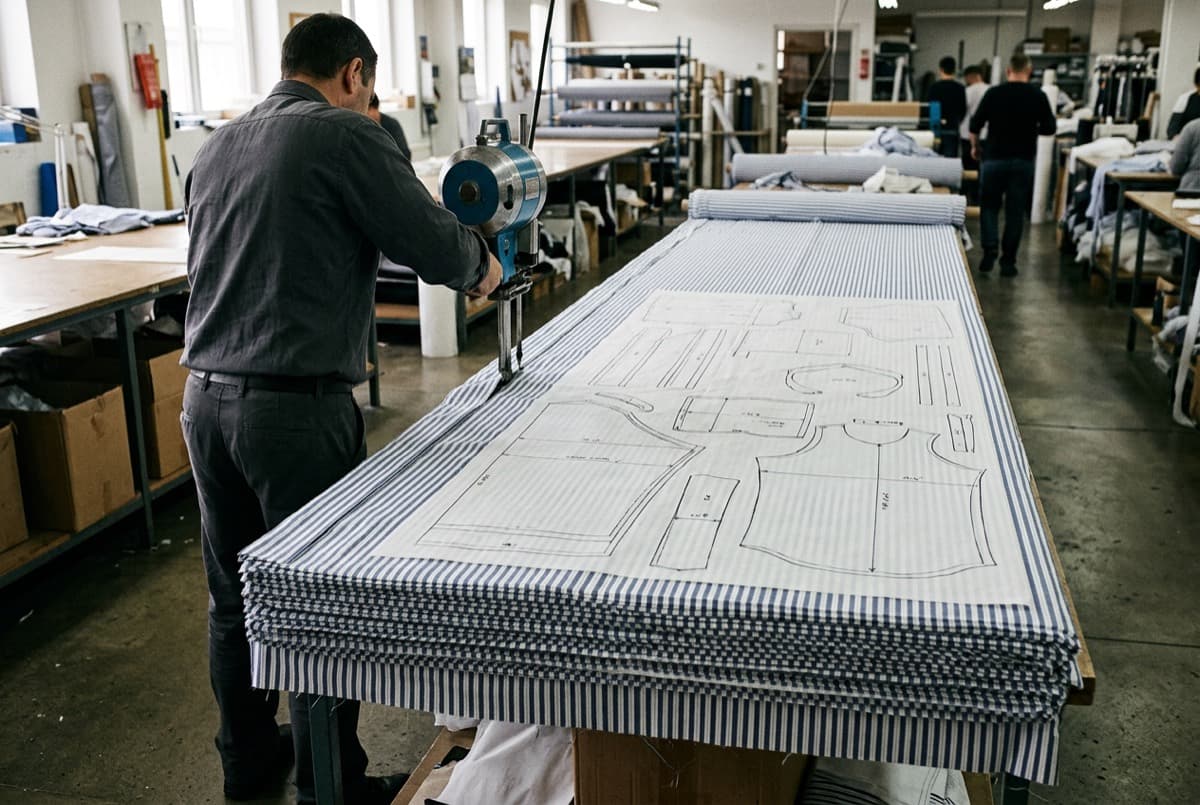
Pattern pieces for every size in the order are nested into a marker, today usually on a computer, and printed full width. Marker efficiency, the share of the fabric the pieces cover, typically runs around 80 to 90 percent for wovens. Stripes and checks that must match at the seams lower it.
The fabric is then spread layer upon layer, a lay of tens of plies, and cut with a straight knife, a band knife for small parts, or an automatic cutter. Each cut piece is numbered so pieces from the same ply stay together, and bundled by size and colour with a bundle ticket. Collars, cuffs and plackets go to fusing, where an interlining is pressed on.
3. The sewing floor: one garment, many hands
A shirt is not sewn by one person. It is broken down into operations: set the collar, attach the yoke, sew the sleeve placket, close the side seams, and dozens more, each with its own time. A line of operators and machines works through them in order, passing bundles along.
Engineers balance the line by grouping operations so each station takes about the same time. A new style then climbs a learning curve: output on day one is a fraction of what the same line makes in its second week. Supervisors read hourly output against target on a board, and inline checkers stop faults where they start rather than at the end.
- Single-needle lockstitch for most seams
- Overlock to finish raw edges
- Buttonhole and button-sewing machines
- Bartack for points of strain
4. Washing and finishing
Some woven garments go to a laundry for a soft hand or a garment-dyed colour. All of them then go through finishing: loose threads trimmed, every piece pressed, buttons checked, and measurements taken against the size chart within its tolerances.
5. Packing and the final audit
Garments are folded, tagged and packed into cartons by size and colour to the buyer's packing list. Before they leave, an inspector draws a random sample under an AQL plan and checks it for faults and measurements. The order ships if the sample passes. The carton count, cubic metres and weight then decide how it travels.
The words, in plain terms
- SMV (standard minute value)
- The standard time to complete a garment or operation at a normal pace, including allowances for fatigue and machine delays.
- Line efficiency
- Standard minutes produced divided by minutes worked. A line making 300 shirts of 20 SMV in 10,000 operator minutes runs at 60%.
- Marker efficiency
- The share of a marker's area covered by pattern pieces; the rest is waste.
- Bundle ticket
- A ticket that travels with a bundle of cut pieces, naming its order, size, colour and quantity, often scanned at each section.
- Four-point system
- A way of scoring fabric faults by their length, from one to four points, to decide whether a roll is acceptable.
Work it out, free
On WOVENN
MAKEX
Runs the factory floor: cutting, bundles, scanning, the line board and quality, for every buyer.
See MAKEXKeep reading
Garment manufacturing · Costing
SMV in garment manufacturing: what it is and how it is set
Standard minute value explained: how a garment's minutes are built from its operations, time study, rating and allowances, and how SMV sets targets and cost.
6 min read · 3 myths bustedRead
Garment manufacturing · Knits · Fabric and mills
How knit garments are made, from yarn to t-shirt
Circular knitting, dyeing, compacting, cutting and overlock sewing: how t-shirts, polos and sweatshirts are made, and why shrinkage and GSM are misunderstood.
7 min read · 3 myths bustedRead
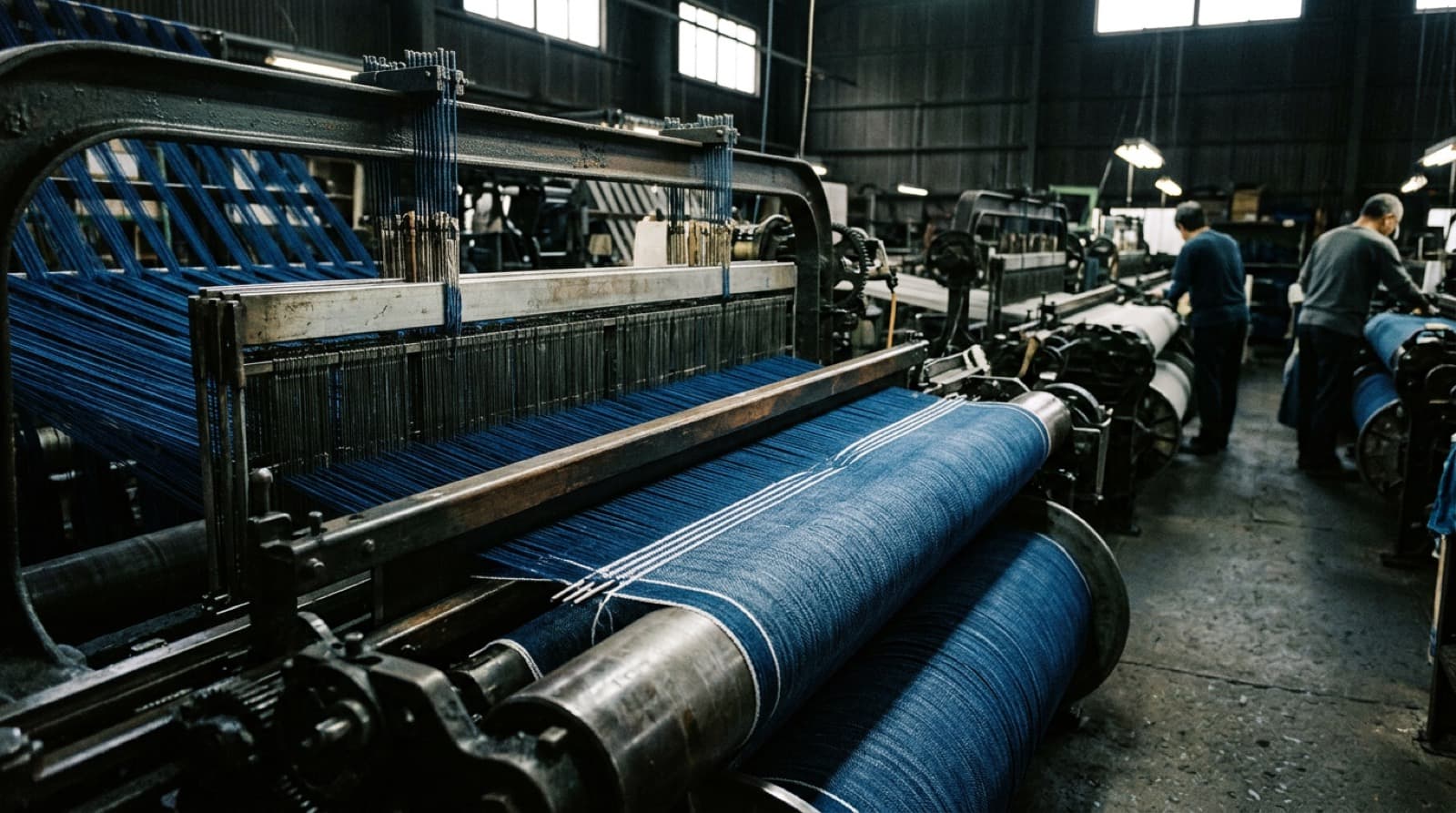
Denim · Garment manufacturing · Fabric and mills
How denim jeans are made: indigo, twill and the wash
Why indigo fades, what 3x1 twill and sanforizing mean, how jeans are sewn and washed, and the truth about stonewash, selvedge and raw denim.
8 min read · 3 myths bustedRead