
How denim jeans are made: indigo, twill and the wash
Denim is a cotton twill whose lengthwise yarns are dyed with indigo and whose crosswise yarns are left white. Jeans are cut and sewn like any woven garment, then taken to a laundry, where washing, abrasion and finishing give each style its look.
Myth or fact?
Myth: Stonewashed jeans are always washed with stones.
Fact: Pumice stones started it, but much of today's wash look comes from enzymes that soften and fade the surface, often with fewer or no stones, alongside laser and ozone finishing that use less water and fewer chemicals.
Myth: Selvedge denim is always better denim.
Fact: Selvedge describes how the fabric was woven: on a narrow shuttle loom that leaves a clean, finished edge. Quality comes from the yarn, the dye and the construction, and excellent denim is woven on wide modern looms too.
Myth: Raw denim never shrinks.
Fact: Raw means unwashed, not unshrinking. Unsanforized, or loomstate, denim can shrink several percent in length the first time it is soaked. Most denim is sanforized at the mill so it moves far less.
1. Why indigo fades the way it does
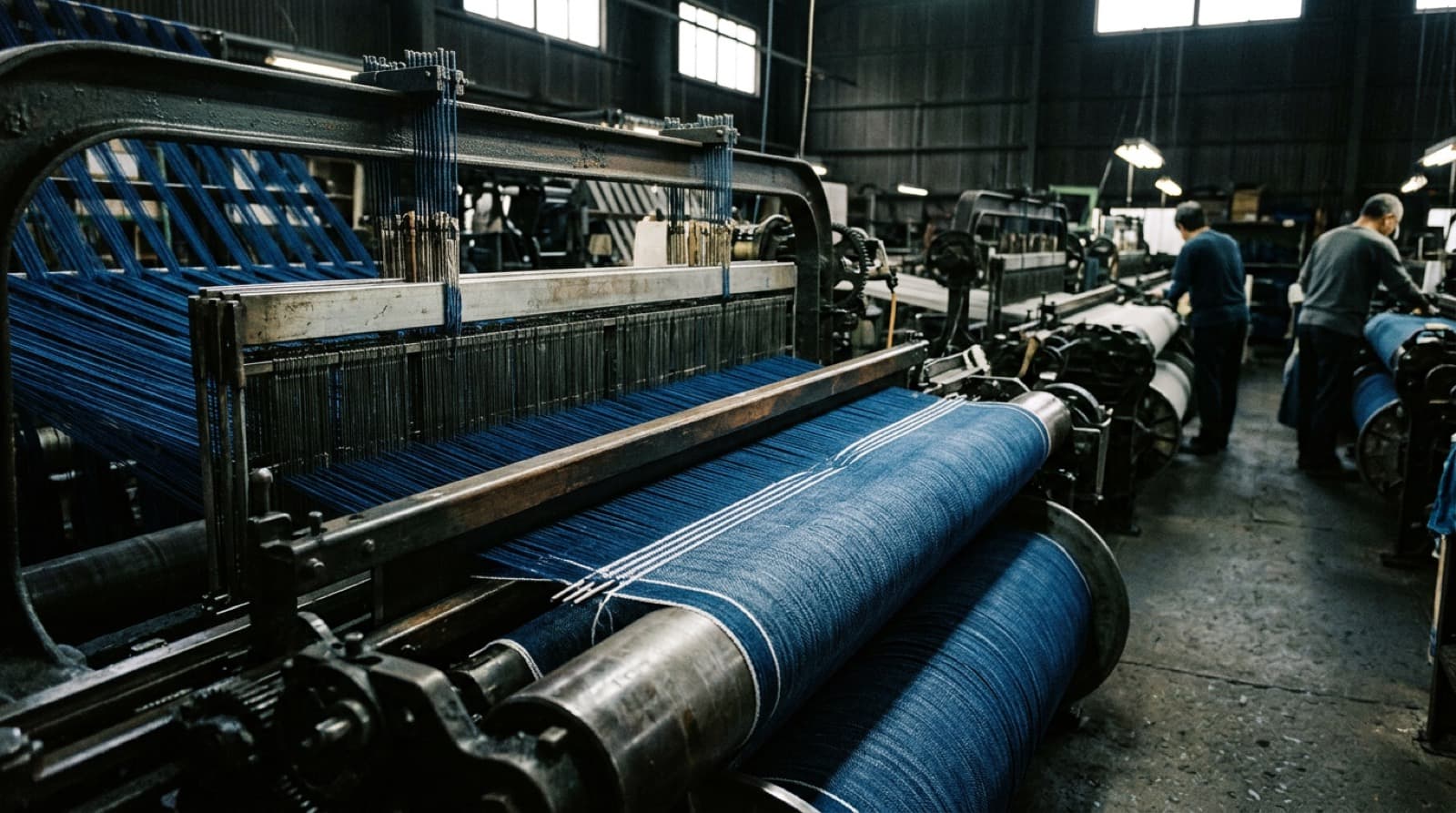
Denim's warp yarns, the ones running the length of the fabric, are dyed with indigo by dipping them again and again, in long ropes or in a wide sheet. Indigo clings to the surface of the yarn and barely reaches the core, so the centre stays pale.
When the surface wears away at the knees, the thighs and the hems, the white core shows through. That is why denim fades to lighter blue where it is used, and why every wash recipe is really a way of controlling that wear.
2. Weaving the twill
Classic denim is a three-by-one twill: each white weft yarn passes under three blue warp yarns and over one, which shows mostly blue on the face, a diagonal line, and a pale back. Its weight is given in ounces per square yard; much jeanswear sits around 11 to 14 ounces, with lighter weights for summer and shirts.
Stretch denim adds an elastic core inside the weft yarn. Before the fabric leaves the mill it is usually sanforized, mechanically pre-shrunk, and its twill may be skewed so the legs do not twist after washing.
3. Cutting and sewing a five-pocket jean
Jeans are cut like any woven garment, with care for shade, because denim varies more from roll to roll than most fabrics. The sewing is heavier: felled seams that fold over and stitch twice, chain stitching that rolls when washed, bartacks and rivets at the points of strain, a zip or button fly, belt loops and a waistband set on a dedicated machine.
- Felled seams on the inseam and back yoke
- Chain-stitched hems that rope in the wash
- Rivets and bartacks at the pockets
- A waistband set in one pass
4. The laundry: where the look is made
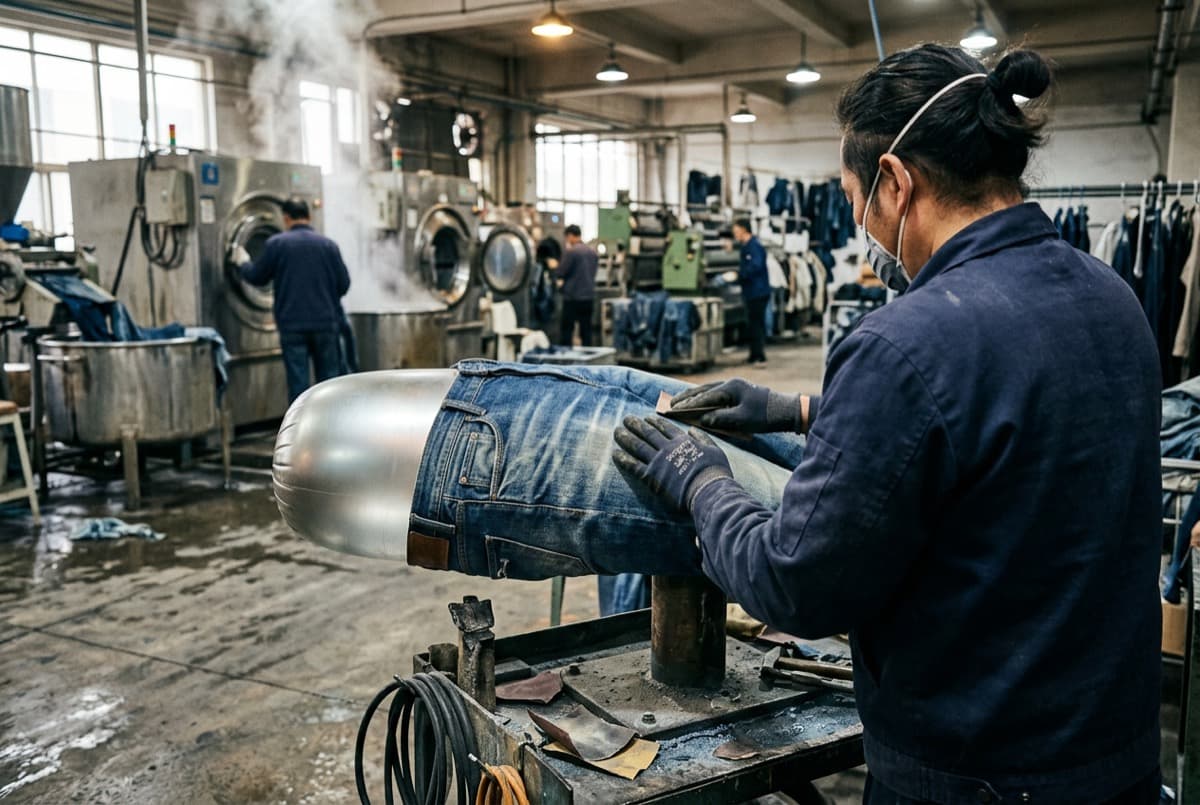
Sewn jeans go to an industrial laundry. A rinse removes the starch; an enzyme wash, with or without stones, fades and softens; a bleach takes the colour further down; a tint can warm it. Dry processes come before or after: hand sanding and whiskers at the hip, grinding at the hems, laser marking for fades and wear patterns, and ozone for a lighter, cleaner cast.
Every wash is matched to an approved standard, because the same recipe on a different roll of denim can come out a shade apart. Laundries cost minutes, water and energy, which is why lasers and ozone have spread so fast.
5. Finishing and fit
After washing, jeans are dried, pressed, measured again (the wash shrinks them, so patterns are made larger to allow for it), fitted with buttons and labels, and packed. Fit is checked on the washed garment, never only on the raw one.
The words, in plain terms
- Indigo rope dyeing
- Dyeing warp yarns gathered into ropes through repeated dips in indigo, giving a deep surface colour with a pale core.
- 3x1 twill
- A weave where the weft passes under three warp yarns and over one, giving denim its diagonal line.
- Sanforizing
- Mechanical pre-shrinking of the fabric at the mill, so the garment shrinks little when washed.
- Selvedge
- The self-finished edge of fabric woven on a narrow shuttle loom, often shown at the outseam of jeans.
- Enzyme wash
- A laundry process using enzymes that act on cotton's surface to soften and fade denim.
Work it out, free
On WOVENN
MAKEX
Washing batches by machine, sub-contracted processes and every section of a jean's route on one record.
See MAKEXKeep reading
Garment manufacturing · Knits · Fabric and mills
How knit garments are made, from yarn to t-shirt
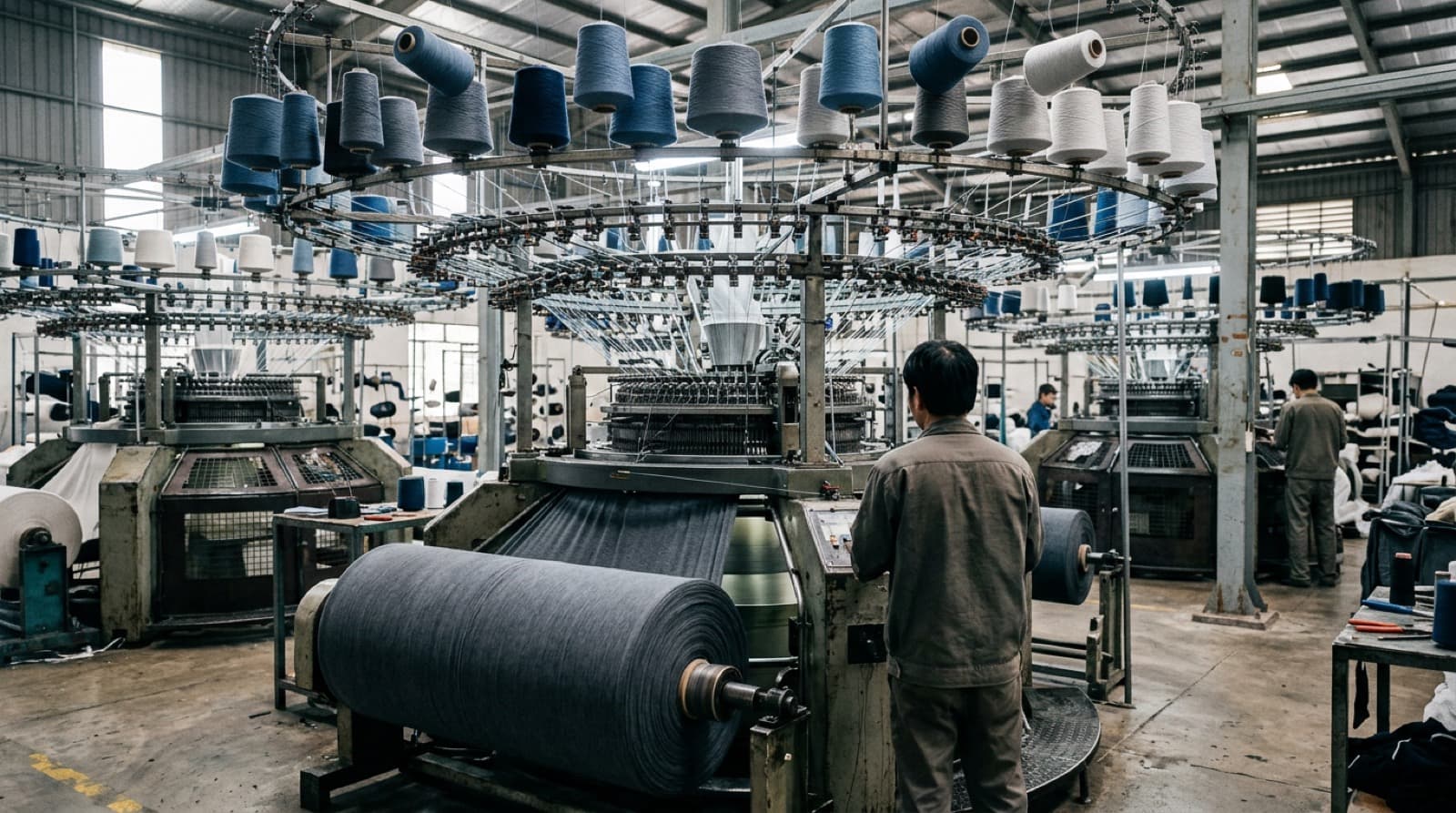
Circular knitting, dyeing, compacting, cutting and overlock sewing: how t-shirts, polos and sweatshirts are made, and why shrinkage and GSM are misunderstood.
7 min read · 3 myths bustedRead
Garment manufacturing · Wovens · Costing
How a woven garment factory really works
From fabric inspection and cutting to sewing lines, finishing and the final audit: how shirts and trousers are made, and three myths about factory speed.
7 min read · 3 myths bustedRead
Fabric and mills · Wovens · Quality
How fabric mills work: spinning, weaving, dyeing and finishing
Spinning, weaving, knitting, dyeing and finishing, lab dips and four-point inspection: how mills make fabric, and why minimums and shade bands exist.
8 min read · 3 myths bustedRead