

Fabric GSM explained: weight, width, metres and kilos
GSM is a fabric's weight in grams per square metre. With the width, it turns kilograms into metres and back: metres per kilogram = 1,000 ÷ (GSM × width in metres). A 180 GSM jersey 1.8 metres wide gives about 3.1 metres a kilogram.
Myth or fact?
Myth: A higher GSM means better quality.
Fact: GSM is weight, not quality. Fibre, yarn and construction decide how a fabric wears; a heavy, loosely made fabric can pill and shrink more than a lighter, tighter one. The right weight depends on the garment.
Myth: Once you know the GSM, width doesn't matter.
Fact: Width decides how many metres a kilogram gives and how well patterns fit the fabric. Price per kilo and price per metre are only comparable at a known width, and usable width is less than full width.
Myth: GSM stays the same from mill to garment.
Fact: Dyeing, finishing and washing change it, and knits relax. Orders state a GSM with a tolerance, often around five percent, measured after finishing.
1. How GSM is measured
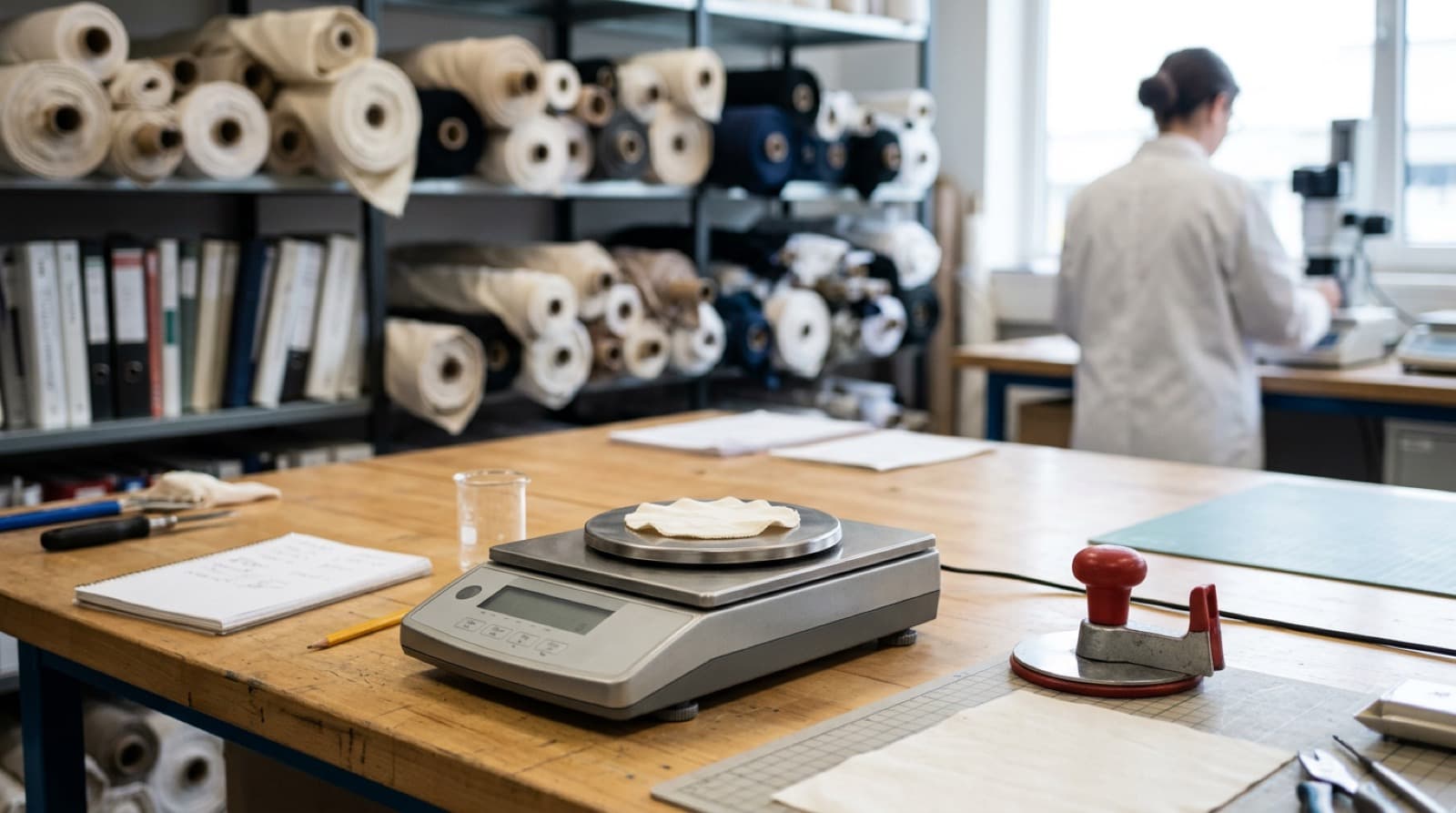
A round cutter takes a sample of exactly 100 square centimetres. Weigh it in grams and multiply by 100 for GSM. Take samples across the width and along the roll, since weight varies.
2. Converting between units
Metres per kilogram = 1,000 ÷ (GSM × width in metres). Kilograms for an order = metres needed × GSM × width in metres ÷ 1,000. For yards, one metre is about 1.094 yards; for ounces per square yard, divide GSM by about 33.9.
- Metres per kg = 1,000 ÷ (GSM × width m)
- Kg = metres × GSM × width m ÷ 1,000
- oz/yd² ≈ GSM ÷ 33.9
- 1 metre ≈ 1.094 yards
3. Price per kilo or per metre
Knits are often sold by the kilogram and wovens by the metre or yard. To compare, convert: price per metre = price per kilogram ÷ metres per kilogram. At 3.1 metres a kilogram, a fabric at 9.30 a kilo costs 3.00 a metre.
4. Typical weights
As a rough guide, T-shirt jersey is often around 140 to 200 GSM, sweatshirt fleece 250 to 350, shirting 100 to 140, and denim is usually quoted in ounces, around 10 to 14 oz (about 340 to 475 GSM). Products differ, so the specification should always state the weight and tolerance.
The words, in plain terms
- GSM
- Grams per square metre: a fabric's weight.
- Cuttable width
- The width of fabric usable for cutting, less than the full width with selvedges.
- oz/yd²
- Ounces per square yard, the weight unit often used for denim.
- Tolerance
- How far the delivered weight may differ from the ordered weight.
Work it out, free
On WOVENN
FABRIX
A market for fabric, yarn and trims: sample and bulk prices, stock by colour and lot, and prices in your currency.
See FABRIXKeep reading
Garment manufacturing · Wovens · Costing
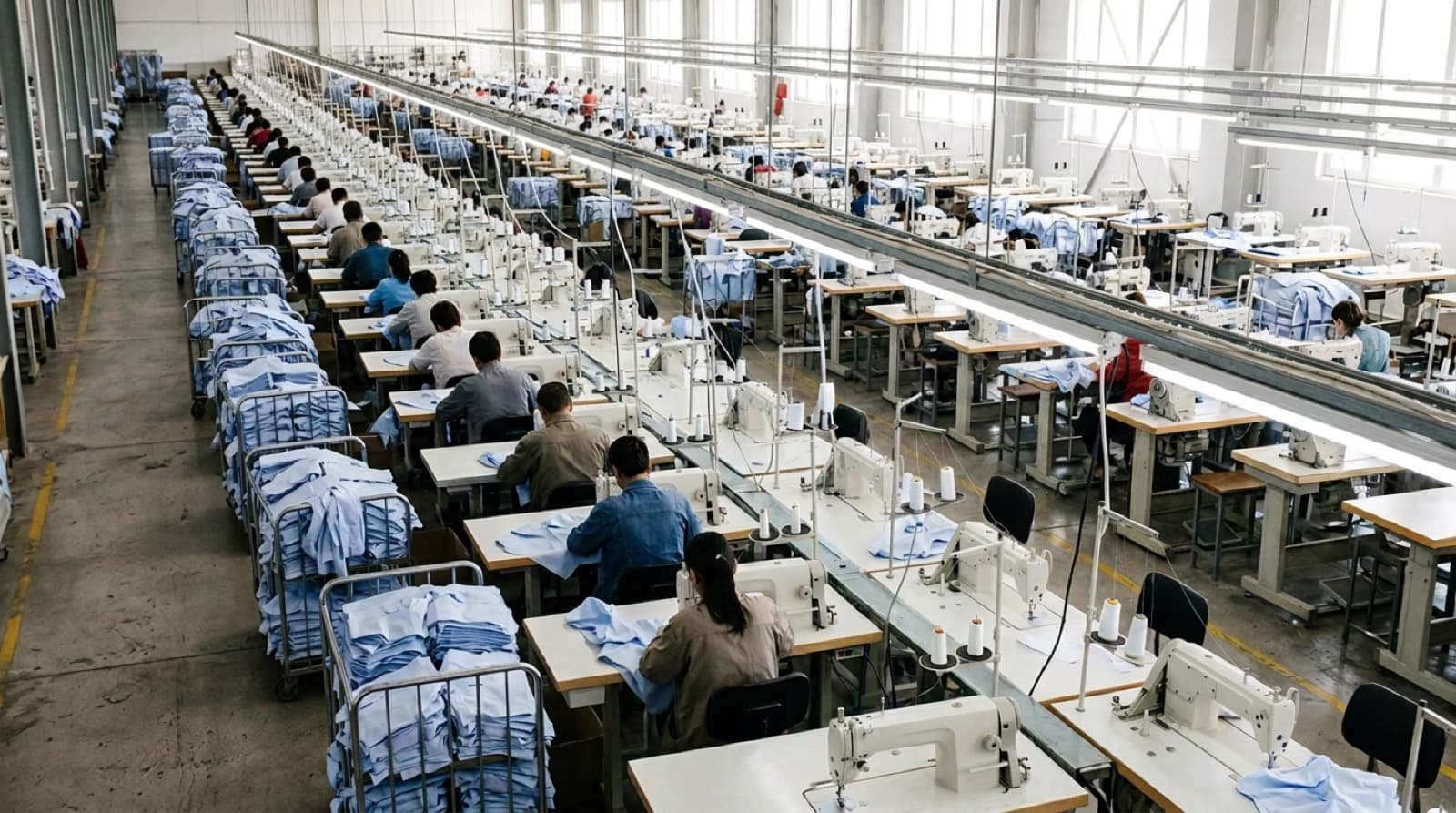
How a woven garment factory really works
From fabric inspection and cutting to sewing lines, finishing and the final audit: how shirts and trousers are made, and three myths about factory speed.
7 min read · 3 myths bustedRead
Garment manufacturing · Knits · Fabric and mills
How knit garments are made, from yarn to t-shirt
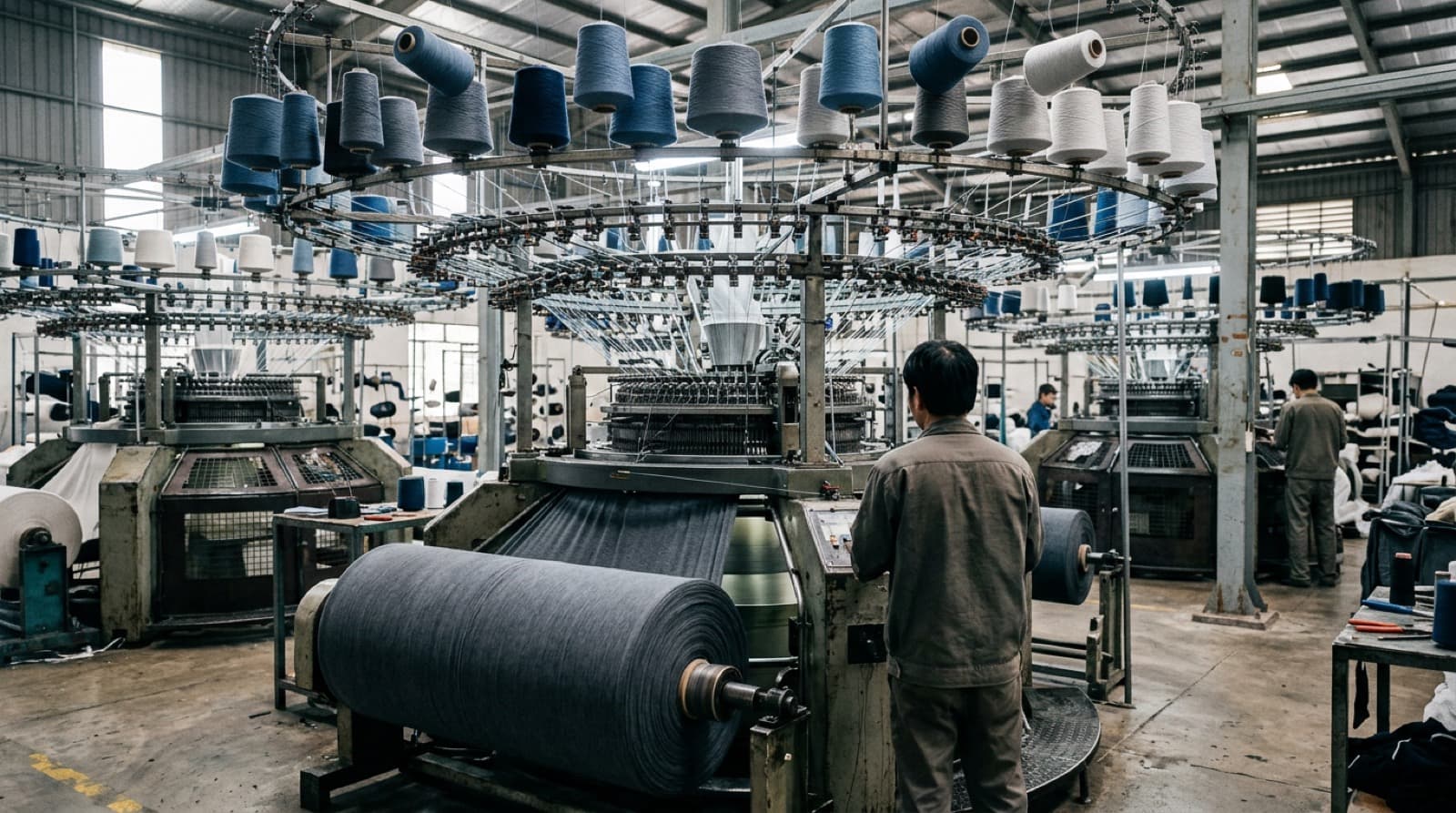
Circular knitting, dyeing, compacting, cutting and overlock sewing: how t-shirts, polos and sweatshirts are made, and why shrinkage and GSM are misunderstood.
7 min read · 3 myths bustedRead
Denim · Garment manufacturing · Fabric and mills
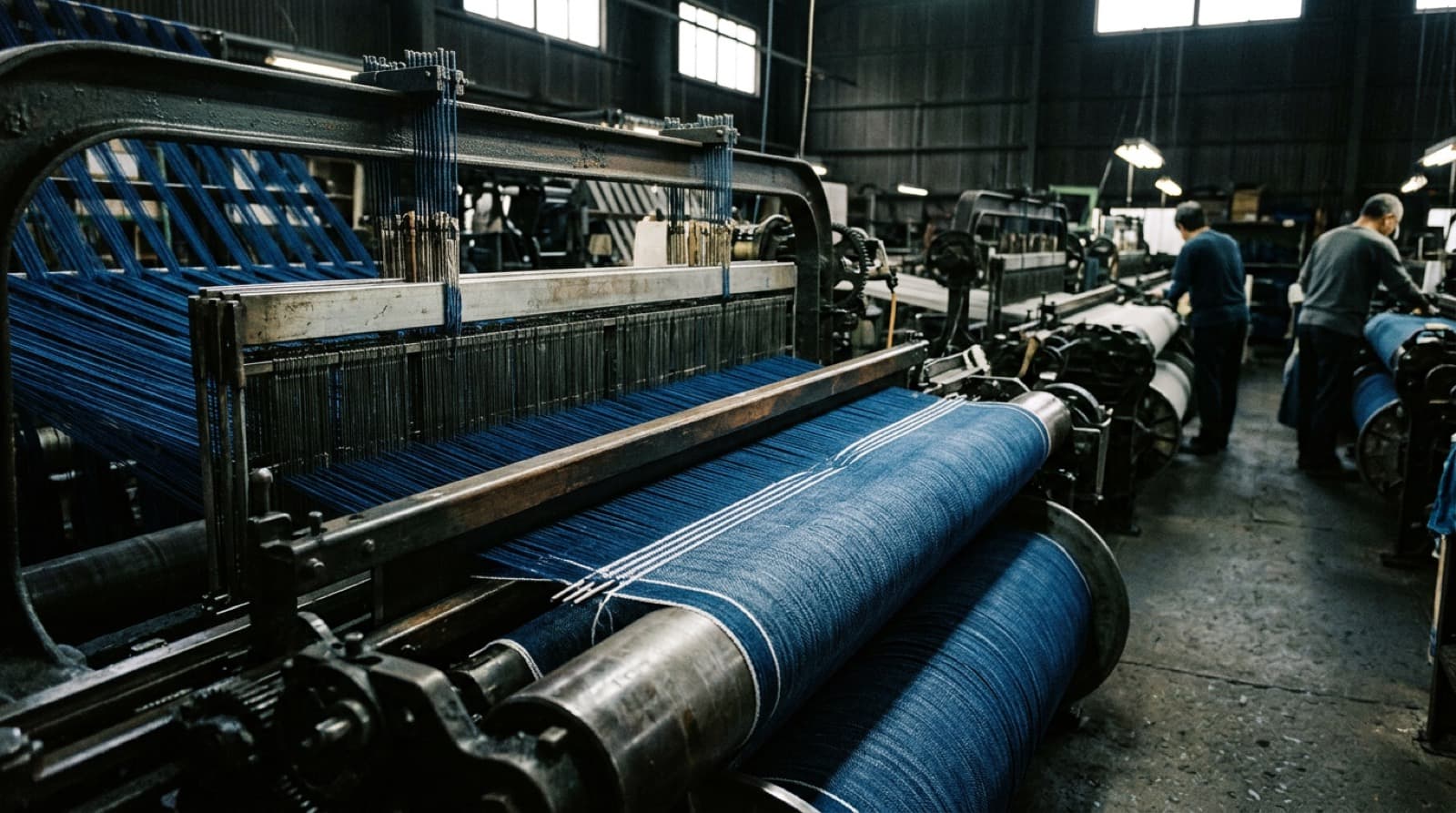
How denim jeans are made: indigo, twill and the wash
Why indigo fades, what 3x1 twill and sanforizing mean, how jeans are sewn and washed, and the truth about stonewash, selvedge and raw denim.
8 min read · 3 myths bustedRead