

FOB, landed cost and margin: how a garment's price is built
A garment's FOB price is what the brand pays the factory for goods loaded on board at the port of shipment. Add freight, insurance, duty and handling to reach the landed cost; the retail price, less sales tax and less that landed cost, is the margin the brand keeps before markdowns.
Myth or fact?
Myth: The FOB price is mostly the factory's profit.
Fact: Materials usually make up the largest share of a garment's cost, with fabric often around half or more. Making, trims, washing or printing, testing, packing, overheads and profit share the rest.
Myth: The lowest FOB is the cheapest supplier.
Fact: Compare landed costs, not FOB prices: freight, duty, minimums, lead time, quality failures and late deliveries all land on the brand's side. A slightly higher FOB can cost less on the shelf.
Myth: The initial markup is what the brand earns.
Fact: Markdowns, returns, shrink and promotions come out of it. The margin actually achieved on a style is often well below the mark-up planned at the start.
1. Building the FOB
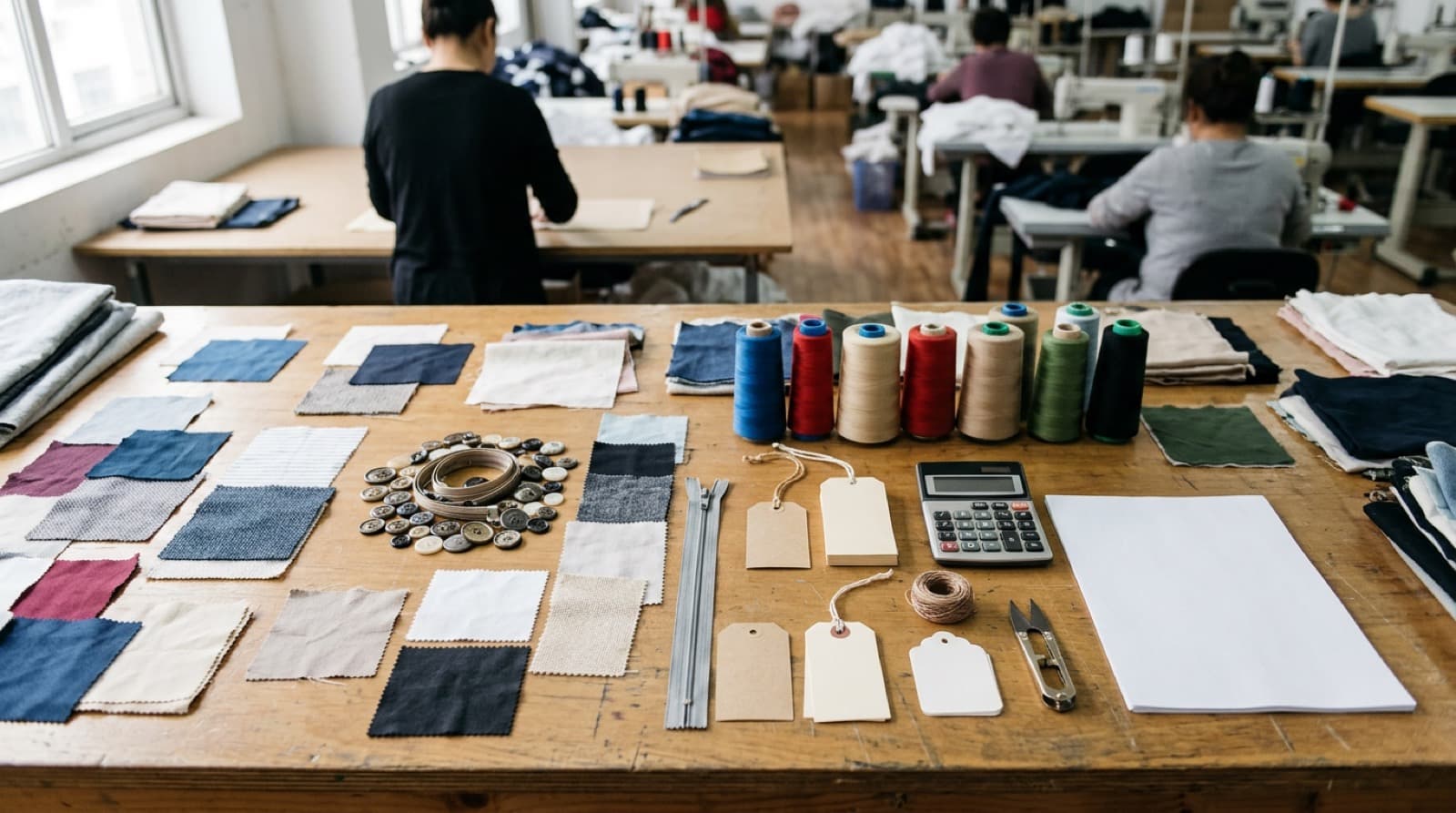
A cost sheet starts with materials: fabric consumption per garment times the fabric price, plus every trim on the bill of materials. Then making (often called CM, cut and make), any washing, printing or embroidery, testing, packing, the factory's overheads and its profit.
- Fabric: consumption × price, with waste
- Trims: buttons, zips, labels, thread, packing
- Making: SMV ÷ efficiency × cost a minute
- Processes: wash, print, embroidery
- Testing, overheads and profit
2. From FOB to landed cost
On top of FOB the brand pays freight and insurance to its own port, customs duty and clearance, and inland transport to its warehouse. Duty depends on the product's tariff classification, its origin and the importing country's rules, so it is worth checking for each product rather than assuming.

3. Retail price and margin
Initial markup (IMU) is the share of the retail price, before sales tax, that is left after the landed cost: (retail − landed cost) ÷ retail. A garment selling for 40.00 before tax with a landed cost of 14.00 has an IMU of 65 percent.
4. Working back to a target FOB
Most brands work backwards. Set the retail price and the IMU you need, and the landed cost follows: 40.00 at 65 percent leaves 14.00. If freight, duty and handling add about a quarter to FOB, the most you can pay the factory is 14.00 ÷ 1.25 = 11.20. That target FOB is what the cost sheet has to meet.
The words, in plain terms
- FOB
- Free on board: the price with goods loaded at the port of shipment; the buyer pays the freight from there.
- Landed cost
- FOB plus freight, insurance, duty, clearance and inland transport: the full cost in the warehouse.
- CM
- Cut and make: the factory's charge for its labour and overheads, without materials.
- IMU
- Initial markup: (retail before tax − landed cost) ÷ retail before tax.
- Target FOB
- The most a brand can pay a factory and still reach its planned margin.
Work it out, free
On WOVENN
SOURCEX
Cost sheets and supplier quotes, landed cost by market, and purchase orders with approvals and budgets.
See SOURCEXKeep reading

Retail · Planning · Costing
How fashion retail makes money: mark-up, markdowns and sell-through
Initial mark-up, landed cost, markdowns, sell-through, weeks of cover and open-to-buy explained, with the myths about doubling the cost and selling out.
7 min read · 3 myths bustedRead
Garment manufacturing · Wovens · Costing
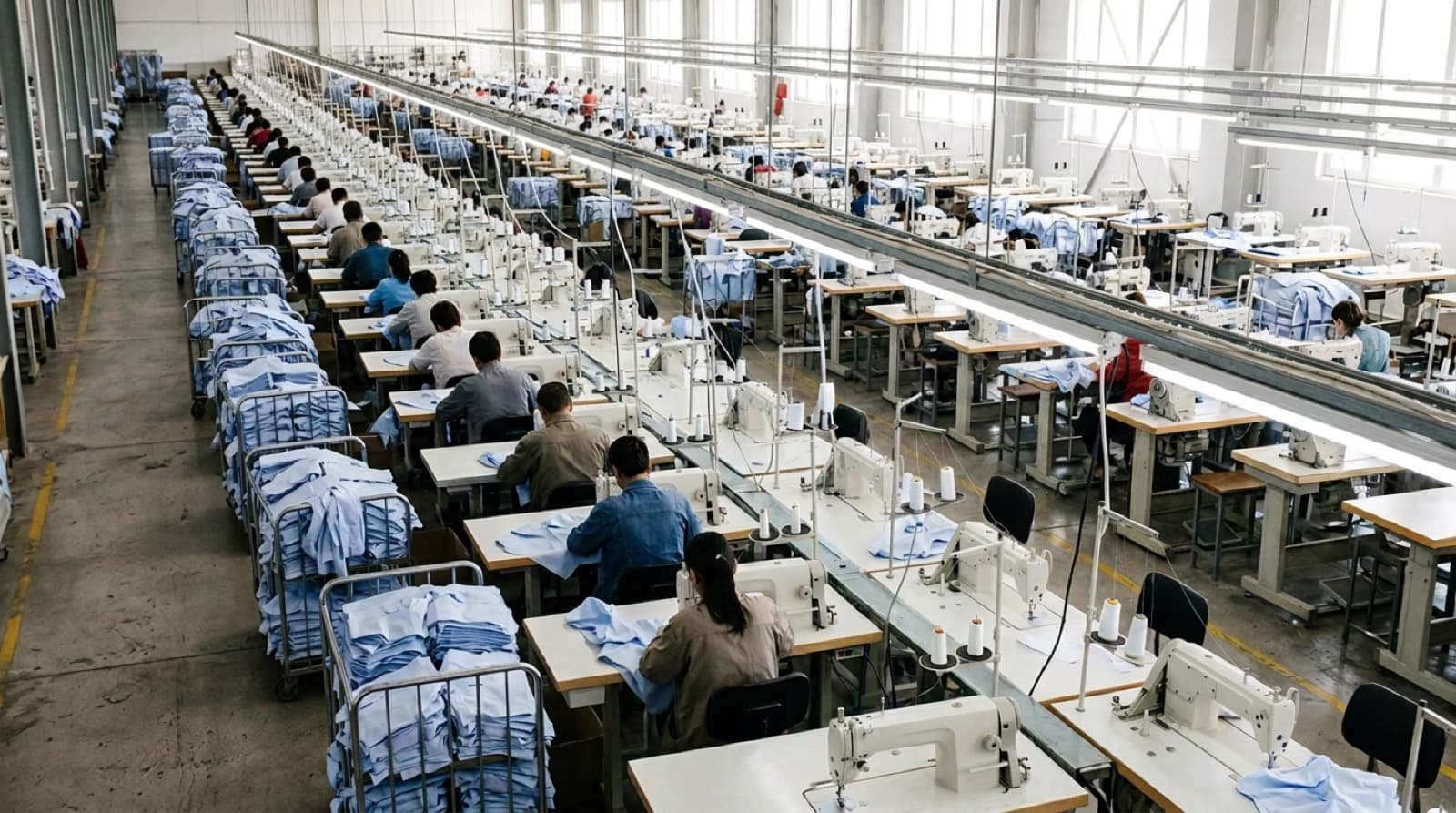
How a woven garment factory really works
From fabric inspection and cutting to sewing lines, finishing and the final audit: how shirts and trousers are made, and three myths about factory speed.
7 min read · 3 myths bustedRead

Planning · Retail
How fashion season planning works, from the numbers to the drop
The financial plan, line plan, range reviews, the buy and the time and action calendar: how a season is planned, and why it starts with numbers.
7 min read · 3 myths bustedRead